
You are never handed a blank box and told to be rigorous.
Software for running behaviour work. You put the problem in the words your team uses. It gives you back something you can work with.
Start a project, freeEvery tool you keep behaviour work in is a tool that knows nothing about behaviour.
Jira will take any ticket. Miro will hold any board. A document will let you write drive adoption and never ask what that means.
This one has an opinion.
Three months in, on a Thursday
The project has gone quiet.
It worked, then it stopped. Or it happens on some days and not others. Or people are doing it, and not quite right.
Three different problems with three different answers.
You name the pattern. BehaviourKit gives you the next move. Push it wider. Try a different lever. Park it and record why. Look again in a fortnight.
A director asks what you're doing about it. You have something to say by Friday.
How a project runs
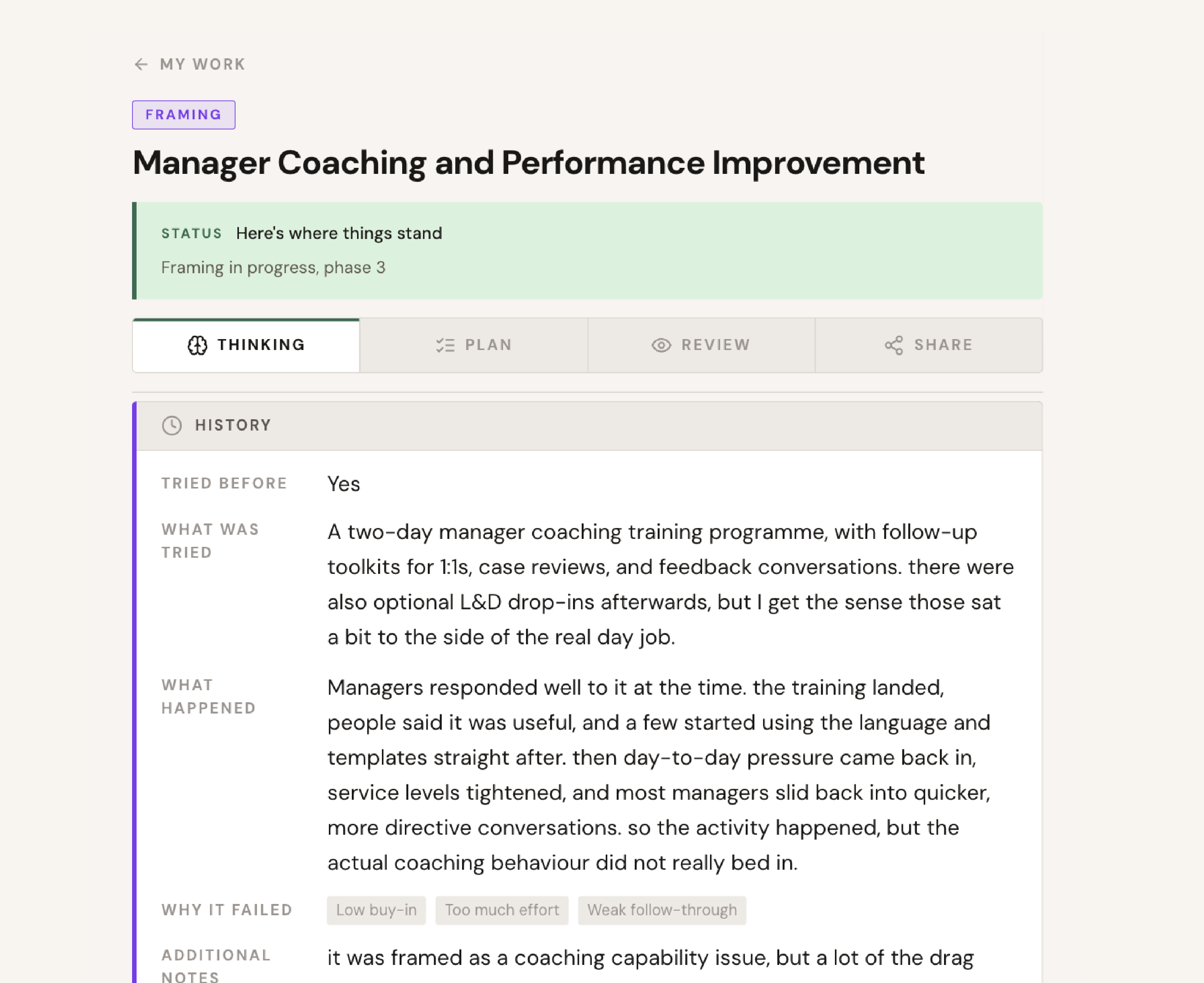
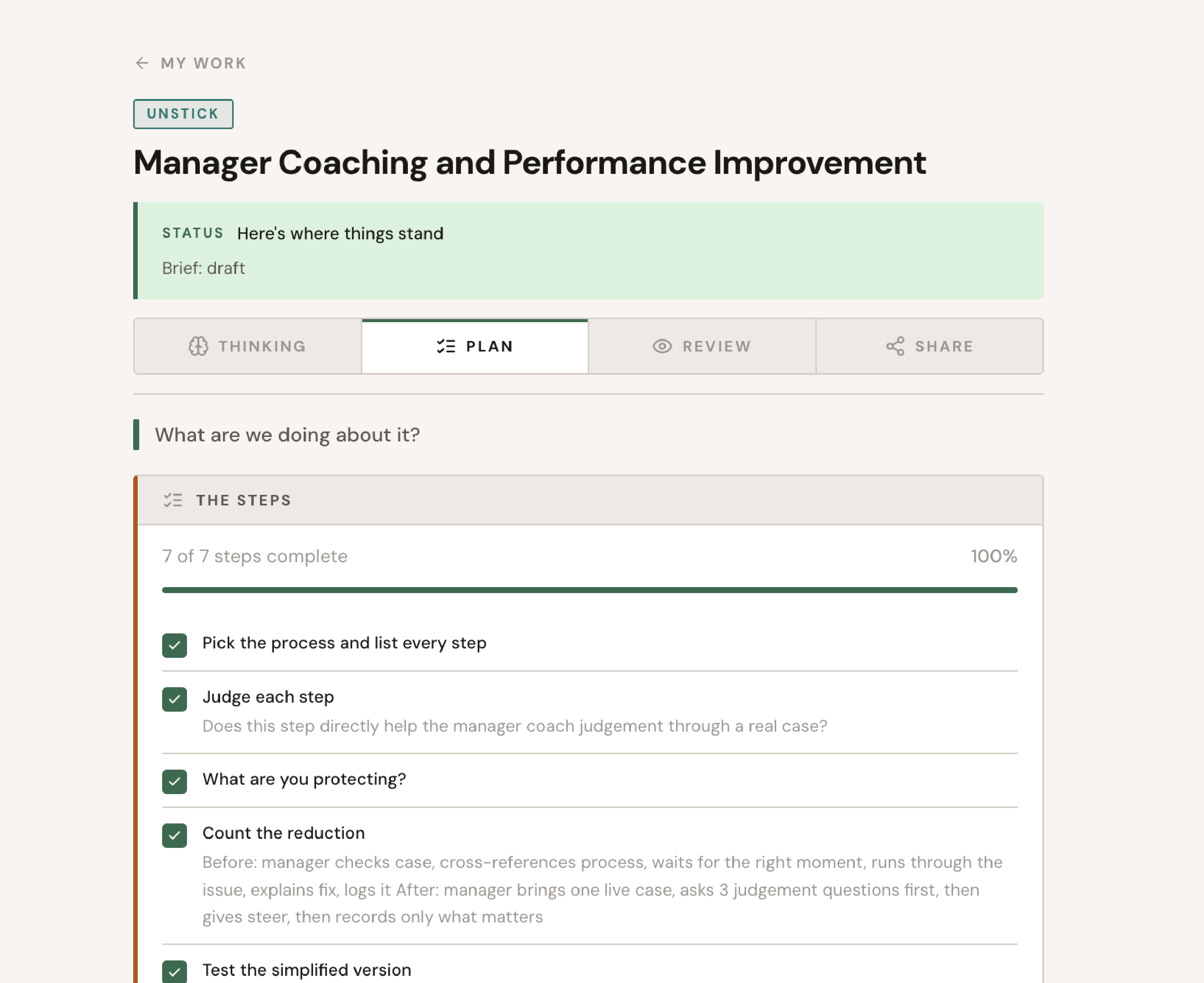
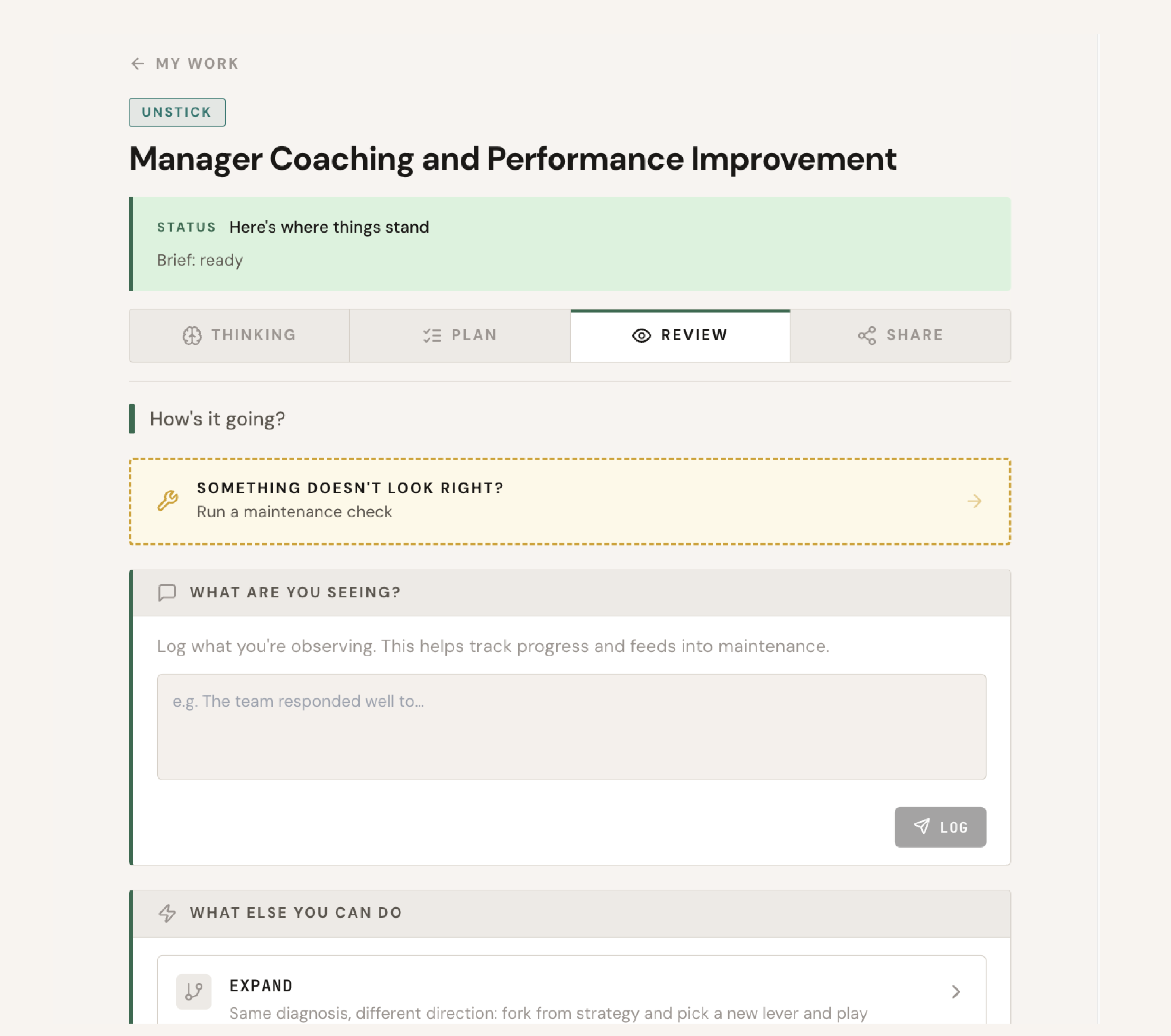
Start with the mess.
Type the problem the way your team says it. Nothing cleaned up. "Nurses aren't logging the readings."
It checks whether behaviour is even the lever.
Sometimes the real bottleneck is a resource constraint, a policy gap, or something well outside the organisation. If that's what's going on, it says so, and it says what is. You can carry on anyway. The other factors go on the record alongside the behaviour work.
You get two to five candidate behaviours.
Each one scored. Can you actually shift it. How fast. At what risk. How much it would move. Then it asks whether you can influence it at all. Partly gets a follow-up. No sends you back to the list.
It gives you the behaviour as one sentence.
Who, doing what, in which moment, instead of what. You edit it until it's right.
Then it helps you build the plan.
Step by step, with the reasoning kept next to each one, and a check before you ship. The first pass takes an afternoon.
Where the opinion comes in
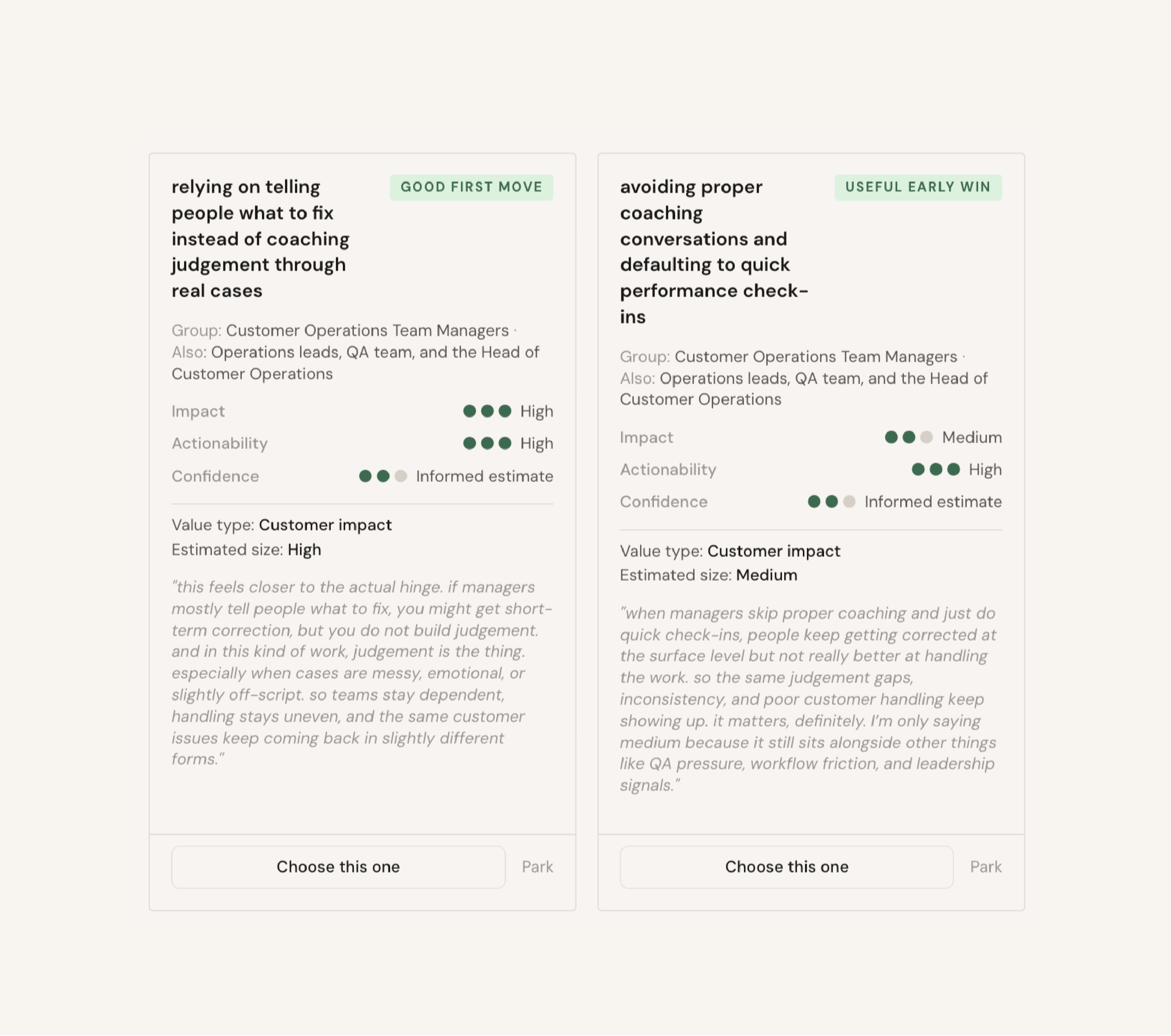
Every move it puts in front of you shows its working.
What's doing the work, and the research it comes from.
Where it's been used, and on what kind of problem.
Where it breaks, and who it leaves worse off.
On the card, before you commit.
If a move can't say when it shouldn't be used, it isn't in there.
Six projects running, and you don't know which one is drifting.
Projects sit in folders, with stages and owners. One behaviour or forty. Yours, or your whole team's.
You can see which ones are live, which are flagged, and who is holding each of them.
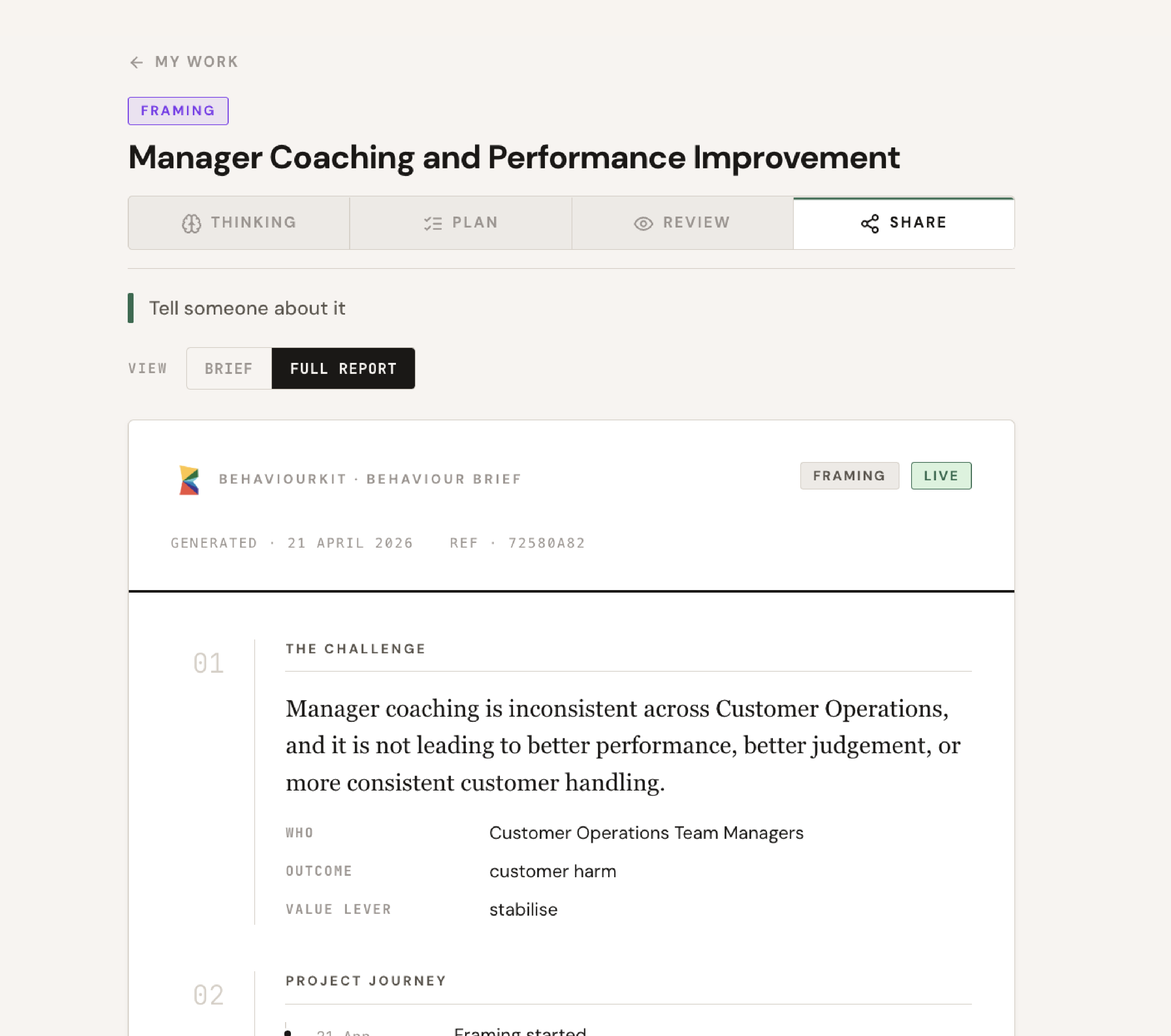
Everything comes out as a document.
The problem. The person. The behaviour. The evidence, and where it's thin. The risks that were flagged. What you agreed to watch, and the rule for when you'd stop.
Reference ID. Generation date. Traceable back to the live project.
Readable by a sponsor, a regulator, or whoever picks the work up after you.
What's underneath
Every recommendation traces back to one of them.
Price

Before the project, there's a day where the team works it out and agrees.
The Behaviour Sprint